PRACTICE TEST 1
-
For
 , the expression
 is identically equal to:
(A)
 ; (B)
; (B)
 ;
;
(C) ; (D)
; (D)  ;
;
(E) .
.
-
The sum of the minimum and the maximum of
 on
segment
on
segment ![[1,7]](mi/mi58.png) equals:
equals:(A)
 ; (B)
; (B)  ; (C)
; (C)  ; (D)
; (D)  ; (E)
; (E)
 .
.
-
The value of
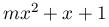 is
strictly positive for all real
is
strictly positive for all real  if and only
if
if and only
if (A)
 ; (B)
; (B)  ; (C)
; (C)  ; (D)
; (D)
 ; (E)
; (E)  .
.
-
If
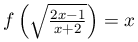 ,
then
,
then  equals:
(A)
 ; (B)
; (B)  ;
(C)
;
(C)  ;
(D)
;
(D)  ;
(E)
;
(E)  .
.
-
The set of all real solutions of
 is:
is:(A)
![[-15,5]](mi/mi102.png) ; (B)
; (B) ![(-\infty,5]](mi/mi95.png) ; (C)
; (C) ![[-\infty,4]](mi/mi100.png) ; (D)
; (D) ![[-10,4]](mi/mi120.png) ; (E)
; (E) ![[-5,5]](mi/mi108.png) .
.
-
When the polynomial
 is divided by
  the remainder is:
(A)
 ; (B)
; (B)  ; (C)
; (C)  ; (D)
; (D)
 ; (E)
; (E)  .
.
-
Polynomial
 has
three distinct real zeros
has
three distinct real zeros  . If
. If  ,
then
,
then  is equal to:
(A)
 or
or  ; (B) ; (C) ; (D)
  or
; (E)
or
or
; (E)
or  .
.
-
If
 and
and  , then
  is equal to:
(A)
 ; (B)
; (B)  ; (C)
; (C)
 ; (D)
; (D)  ; (E)
; (E)
 .
.
-
The set of all real numbers satisfying
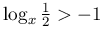 is:
is:(A)
 ; (B)
; (B)  ; (C)
; (C)  ; (D)
; (D) 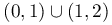 ; (E)
; (E)  .
.
-
The modulus of the complex number
 is:
is:(A)
; (B) ; (C)  ; (D)
; (E)
; (D)
; (E)  .
.
-
The sum of absolute values of the real parts of the solutions of
 is:
is:(A)
; (B)  ; (C) ; (D)
  ; (E)
; (E)  .
.
-
If
 ,
then:
,
then:(A)
 ; (B)
; (B) 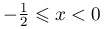 ; (C)
; (C)  ; (D)
; (D)  ; (E)
; (E)  .
.
-
The minimum of function
 is:
is:(A)
 ; (B)
; (B)  ; (C)
; (C)  ; (D)
; (D)  ; (E)
; (E)  .
.
-
What is the smallest positive solution of the equation
 ?
?(A)
 ; (B)
; (B)  ; (C)
; (C)  ; (D)
; (D)
 ; (E)
; (E)  .
.
-
A rhombus has side length
 and area
  . What is the
length of its longer diagonal?
. What is the
length of its longer diagonal?(A)
 ; (B)
; (B)  ; (C)
; (C)  ; (D)
; (D)
 ; (E)
; (E)  .
.
-
The base of an isosceles triangle is
, and the radius
of its inscribed
circle is  . What is the perimeter of the
triangle?
. What is the perimeter of the
triangle?(A)
 ; (B)
; (B)  ; (C)
; (C)  ; (D)
; (D)
 ; (E)
; (E)  .
.
-
The base of a pyramid is a parallelogram with sides
 and
and
 and area
  . The height
of the pyramid is
. The height
of the pyramid is  and its foot is the
intersection point of the diagonals of the base. The lateral area
of the pyramid is:
and its foot is the
intersection point of the diagonals of the base. The lateral area
of the pyramid is: (A)
 ; (B)
; (B)
 ; (C)
; (C)
 ; (D)
; (D)  ; (E)
; (E)  .
.
-
Given the points
 and
and  , the slope of
the perpendicular bisector of
segment
, the slope of
the perpendicular bisector of
segment  is:
is:(A)
; (B)  ; (C)
; (C)  ; (D)
; (D)
 ; (E)
; (E)  .
.
-
The sum of the first 3 terms of an arithmetic progression is 5, and the sum of the first 5 terms is 7. What is the sum of first 7 terms?
(A)
 ; (B)
; (B)  ; (C)
; (C)
 ; (D)
; (D)  ; (E)
; (E)  .
.
-
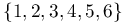
Consider all three-digit numbers composed of digits from the set
 . How many of them are greater
than
. How many of them are greater
than  ?
?(A)
; (B)  ; (C) ; (D)
  ; (E)
; (E)
 .
.