PRACTICE TEST 2
-
The value of the expression
 is:
is:(A)
 ; (B)
; (B)  ; (C)
; (C)  ; (D)
; (D)
 ; (E)
; (E)  .
.
-
Point
 lies on the parabola
  . The ordinate of the vertex
of the parabola is
. The ordinate of the vertex
of the parabola is(A)
 ; (B)
; (B)  ; (C)
; (C)  ; (D)
; (D)  ; (E)
; (E)  .
.
-
Which quadratic equation has the solutions
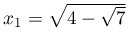 and
and 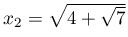 ?
?(A)
 ; (B)
; (B)  ; (C)
; (C)
 ;
;
(D) ; (E)
; (E)
 .
.
-
If
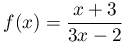 , then
  equals:
(A)
 ; (B)
; (B)  ; (C)
; (C)
 ; (D)
; (D)  ; (E)
; (E)
 .
.
-
The minimum of the function
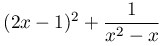 for
for  is equal to:
(A)
 ;
(B) ; (C) ;
(D)
;
(B) ; (C) ;
(D)  ; (E)
; (E)  .
.
-
If the polynomial
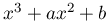 is divisible by the polynomial
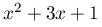 then
then
 is equal to:
(A)
;
(B) ; (C)  ; (D)
; (D)  ;
(E)
;
(E)  .
.
-
If
 and
and  are roots of the
polynomial
are roots of the
polynomial  , then the smallest
real root of this polynomial is:
, then the smallest
real root of this polynomial is:(A)
 ; (B)
; (B)  ; (C)
;
(D)
; (C)
;
(D)  ;
(E)
;
(E)  .
.
-
The solution of the equation
 lies in the interval:
(A)
 ; B)
; B)  ; (C)
; (C)
 ; (D)
; (D)  ; (E)
; (E)  .
.
-
If
is the solution of the equation
 with , then
 is equal to:
(A)
 ; (B) ; (C)
; (D)
; (B) ; (C)
; (D)  ; (E)
; (E)  .
.
-
If
 is a
positive real number and
is a
positive real number and
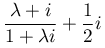 is real number,
then equals
is real number,
then equals (A)
 ; (B)
; (B)  ; (C)
; (C)  ; (D)
; (E) .
; (D)
; (E) .
-
The imaginary part of the solution of the equation
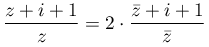 is:
is:(A)
 ; (B) ; (C)
  ; (D)
; (D)
 ; (E) .
-
If
 , then the expression
  equals:
(A)
 ; (B)
; (B)  ; (C)
; (C)  ; (D)
; (D)
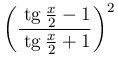 ;
;
(E)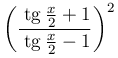 .
.
-
If
 , then the possible values of the expression
 are:
are:(A)
 and
and  ; (B)
; (B)  and
and  ; (C)
; (C)  ; (D)
; (D)
 ; (E) and
.
; (E) and
.
-
The set of all solutions of the inequality
 in the interval
 is:
is:(A)
 ; (B)
; (B)  ; (C)
; (C)
 ; (D)
; (D)
 ;
;
(E) .
.
-
An isosceles trapezoid with the acute angle
 and the shorter base
is
circumscribed about a circle. The length of a
diagonal of this trapezoid is:
and the shorter base
is
circumscribed about a circle. The length of a
diagonal of this trapezoid is:(A)
 ; (B) ; (C) ; (D)
 ; (E) .
-
The edge of a cube is 2. Each diagonal of the cube is extended by 1 on both sides, producing a larger cube. The volume of the larger cube is:
(A)
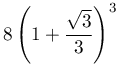 ; (B)
; (B)  ; (C)
; (C)
 ; (D)
; (D) 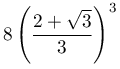 ; (E)
; (E)

-
A cone of height
 is inscriped in a sphere of radius
 .
The lateral area of this cone is:
.
The lateral area of this cone is:(A)
 ; (B)
; (B)  ; (C)
; (C)
 ; (D)
; (D)  ; (E)
; (E)  .
.
-
The tangent to the circle
 at point
 meets
axis at the point
meets
axis at the point  . Then
  equals:
(A)
 ; (B)
; (B)  ; (C)
; (C)  ; (D)
; (D)  ; (E)
; (E)
 .
.
-
The sum of the first 10 terms of an arithmetic progression is equal to the sum of the first 15 terms. If the 10-th term is equal to 15, then the first term is:
(A)
 ; (B)
; (B)  ; (C)
; (C)  ; (D)
; (D)  ; (E)
; (E)
 .
.
How many four-digit numbers with the digits arranged in the strictly increasing order are there?
(A)
 ; (B)
; (B)  ; (C)
; (C)  ; (D)
; (D)  ; (E)
; (E)  .
.