PRACTICE TEST 3
-
The number
![\sqrt[3]{2-\sqrt{5}}+\sqrt[3]{2+\sqrt{5}}](mi/mi72.png) is equal to
is equal to(A) undefined; (B)
![\sqrt[3]{4}](mi/mi74.png) ; (C)
; (C)
 ; (D)
; (D)  ; (Е)
; (Е)  .
.
-
The minimum of the function
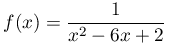 on the set
![[3,5]\cup[7,9]](mi/mi36.png) is:
is:(A)
 ; (B)
; (B)  ; (C)
; (C)  ; (D)
; (D)
 ; (Е)
; (Е)  .
.
-
The roots of the equation
 differ by if and only if:
(A)
 ;
(B)
;
(B)  ; (C)
; (C) 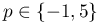 ; (D)
; (D)
 ;
(Е)
;
(Е) 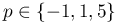 .
.
-
How many real solutions does the equation
![\displaystyle\sqrt[4]{x}-2\sqrt[8]{x}=\frac{1}{2}](mi/mi14.png) have?
have?(A)
; (B)  ; (C)
; (C)  ; (D)
; (D)  ; (Е)
; (Е)  .
.
-
If
 and
and  ,
then
,
then  is equal to:
(A)
 ; (B)
; (B)  ;
(C) ; (D) ;
(Е)
;
(C) ; (D) ;
(Е)  .
.
-
The difference between the maximum and the minimum of the function
 on the
segment [-1,1] is:
on the
segment [-1,1] is:(A)
 ; (B) ;
(C)
; (B) ;
(C)  ;
(D)
;
(D)  ; (Е)
; (Е)  .
.
-
A polynomial gives the remainder 1 when divided by by
 ,
and
when divided by
,
and
when divided by  . What is the
remainder of this polynomial when divided by
. What is the
remainder of this polynomial when divided by
 ?
?(A)
;
(B)  ; (C)
; (C)  ;
(D)
;
(D)  ; (Е)
; (Е)
 .
.
-
What is the sum of solutions of the equation
 ?
?(A)
; (B) ; (C)  ; (D) ; (Е)
.
; (D) ; (Е)
.
-
How many real solutions does the equation
 have?
have?(A)
; (B) ; (C) ; (D) ; (Е) .
-
The complex number
 is equal to:
(A)
; (B)  ; (C)
; (C)  ; (D)
; (D)
 ; (Е)
; (Е)  .
.
-
If
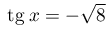 and
and  ,
what is
,
what is  ?
?(A)
 ; (B)
; (B)  ; (C)
; (C)
 ; (D)
; (D)  ; (Е)
; (Е)  .
.
-
Which of the following expressions is identically equal to
 ?
?(A)
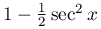 ; (B)
; (B) 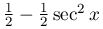 ; (C)
; (C)
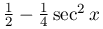 ; (D)
; (D)  ;
;
(Е)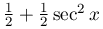 .
.
-
How many solutions does the equation
 have in
 ?
?(A)
; (B) ; (C) ;
(D) ; (Е) .
-
In a right-angled triangle, one leg is 5 times the radius of the inscribed circle, and the other leg has length 1. What is the length of the hypotenuse?
(A)
 ; (B)
; (B)  ; (C)
; (C)  ; (D)
; (D)  ; (Е)
; (Е)  .
.
-
A trapezoid
 with the bases
  and
and  is circumscribed
about a circle of diameter
is circumscribed
about a circle of diameter  . What is the length of the smaller
leg of the trapezoid?
. What is the length of the smaller
leg of the trapezoid?(A)
 ; (B) ; (C) ; (D)
 ; (Е)
; (Е)  .
.
-
The area of the smaller diagonal cross-section of a regular hexagonal prism is
 . The lateral area of the prism is
equal to:
. The lateral area of the prism is
equal to: (A)
 ; (B)
; (B)  ; (C)
; (C)  ; (D)
; (D)
 ; (Е)
; (Е)  .
.
-
The total area of a cone is twice the area of the sphere inscribed in that cone. Then the volumes ot the cone and the sphere are in ratio:
(A)
 ; (B)
; (B)  ; (C)
; (C)  ; (D)
; (D)
 ; (Е)
; (Е)  .
.
-
If the circles
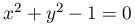 and
and
 are
externally tangent, then the value of
are
externally tangent, then the value of  is:
is:(A)
; (B) ; (C) ; (D)  ; (Е)
; (Е)  .
.
-
The first, third and sixth term of an arithmetic progression are also three consecutive terms of some geometric progression. If the first term of the arithmetic progression is 1, what is the sum of its first six terms?
(A)
; (B)  ; (C)
; (C)  ; (D)
; (D)
 ; (Е)
; (Е)  .
.
-
In how many ways can we place four people and two (distinct) elephants into three trucks so that the two elephants are not in the same truck?
(A)
 ; (B)
; (B)  ; (C)
; (C)  ; (D)
; (D)  ; (Е)
; (Е)
 .
.