PRACTICE TEST 4
-
Given that
 and
and 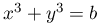 , what is
 ?
?(А)
 ; (B)
; (B)  ; (C)
; (C)
 ; (D)
; (D)  ; (Е)
; (Е)
 .
.
-
The graph of the function
 contains point
 if
if(А)
 ; (B)
; (B)  ; (C)
; (C)  ; (D)
; (D)  ; (Е)
; (Е)
 .
. -
The sum of squares of the equation
 equals
  . What is
 ?
?(А)
 ; (B)
; (B)  ; (C)
; (C)  ; (D)
; (D)  ; (Е)
; (Е)
 .
.
-
The set of solutions of the inequality
 is:
is:(А)
 ; (B)
; (B)  ; (C)
; (C)
 ;
;
(D) ; (Е)
; (Е)
 .
.
-
If
 , then
 equals:
(А)
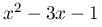 ;
(B)
;
(B)  ; (C)
; (C)  ; (D)
; (D)
 ; (Е)
; (Е) 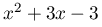 .
.
-
The domain of the function
 is:
is:(А)
![(-\infty,0]\cup[2,\infty)](mi/mi100.png) ; (B)
; (B)  ; (C)
; (C)
 ; (D)
; (D) ![(-\infty,0]\cup(\frac{1}{2},\infty)](mi/mi60.png) ; (Е)
; (Е)  .
.
-
The product of all values of the real number
 for which the polynomials
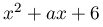 and
and 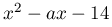 have a real root in common is:
(А)
 ; (B)
; (B)  ; (C)
; (C)  ; (D)
; (D)  ; (Е)
; (Е)
 .
.
-
The number of the solutions of the equation
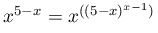 in the interval
 is:
is:(А)
 ; (B) ; (C)
  ; (D)
; (D)  ; (Е) greater than
.
; (Е) greater than
.
-
If
 are
are  the solutions of the system of
equations
the solutions of the system of
equations  ,
,
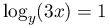 , then
  is equal to:
(А)
 ; (B)
; (B)  ; (C)
; (C)  ; (D)
; (D)  ; (Е) .
-
What is the value of
 ?
?(А)
; (B)  ; (C)
; (C)  ; (D)
; (D)  ; (Е)
; (Е)
 .
.
-
If
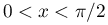 and
and  , then
  equals:
(А)
; (B)  ; (C)
; (C)  ; (D)
; (D)
 ; (Е)
; (Е)  .
.
-
Which of the following expressions is identically equal to
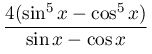 ?
?(А)
 ; (B)
; (B)  ;
;
(C) ; (D)
; (D)  ;
;
(Е) .
.
-
The sum of the three smallest positive solutions of the equation
 is:
is:(А)
 ; (B)
; (B)  ; (C)
; (C)  ; (D)
; (D)  ; (Е)
; (Е)  .
.
-
The equilateral triangle
 has the side length . Line
  is parallel to side
  and distinct from it,
and is tangent to the inscribed circle of
triangle . The
length of the part of the line
inside the triangle is:
and distinct from it,
and is tangent to the inscribed circle of
triangle . The
length of the part of the line
inside the triangle is: (А)
 ; (B)
; (B)  ; (C)
; (C)  ; (D)
; (D)  ; (Е)
; (Е)  .
.
-
A regular octagon of area 4 is inscribed in a circle. The radius of the circle is:
(А)
; (B)  ; (C)
; (C)
 ; (D)
; (D) ![\sqrt[4]{2}](mi/mi121.png) ; (Е)
; (Е)  .
.
-
If the height of a regular tetrahedron is
 ,
then its surface area is:
,
then its surface area is:(А)
 ; (B)
; (B)  ; (C)
; (C)
 ; (D)
; (D)  ; (Е)
; (Е)  .
.
-
A right-angled trapezoid with the bases
 and
and  , and the shorter leg
 can rotate about either
base, thus producing two different solids. The ratio
of the surface areas of these two solids is:
can rotate about either
base, thus producing two different solids. The ratio
of the surface areas of these two solids is:(А)
 ; (B)
; (B)  ; (C)
; (C)  ; (D)
; (D)  ; (Е)
; (Е)
 .
.
-
The distance between the two tangents to the ellipse
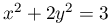 parallel to the line
  is:
is:(А)
; (B) ; (C)  ; (D)
; (D)  ; (Е)
; (Е)  .
.
-
The sum of the second, third and fourth term of a geometric progression is 3, and the sum of the squares of these three terms is 5. Then the sum of the first and the fifth term of the progression is:
(А)
 ; (B)
; (B)  ; (C) ; (D)
 ; (Е)
; (Е)  .
.
-
In how many ways can one choose three cards of pairwise distinct values and distinct colors from the standard 52-card deck?
(А)
 ; (B)
; (B)  ; (C)
; (C)  ; (D)
; (D)  ; (Е)
; (Е)  .
.